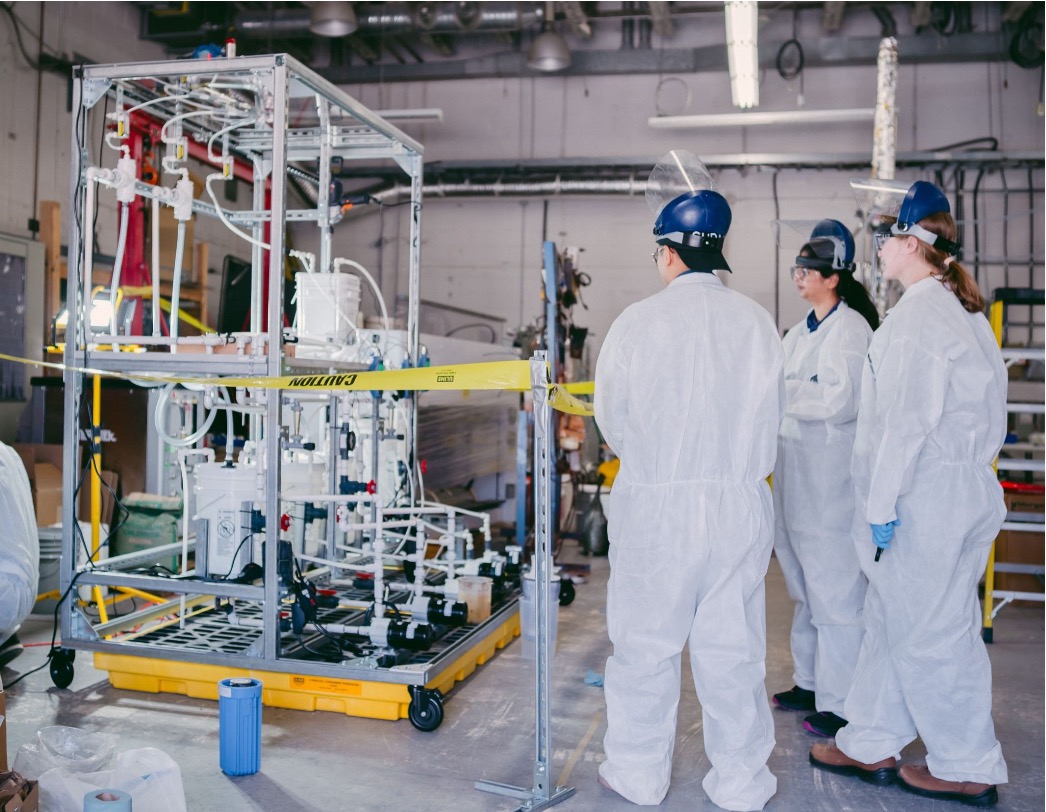
An upstream approach to cement decarbonization
CURA Partners With Sylvera To Monetize Low-Carbon Cement Advantage
CURA has partnered with Sylvera to translate its emissions performance into measurable commercial value, highlighting a growing challenge in markets for low-carbon industrial materials.
The collaboration centers on independently validating CURA’s carbon intensity and identifying pathways to monetize its lower-emissions cement.
Despite rapid innovation in the sector, producers often struggle to capture price premiums due to inconsistent standards, fragmented data, and limited transparency around carbon performance.
Cement production accounts for roughly 8% of global CO2 emissions, placing the sector under increasing regulatory and commercial pressure to decarbonize. CURA’s technology, which the company says can reduce emissions by up to 85% compared to conventional processes, positions it among the lowest-carbon producers globally, but turning that advantage into revenue remains complex.
“The green premium opportunity is clear, but producers need credible, independent data to prove their advantage, and they need the ongoing intelligence to navigate a rapidly shifting regulatory and commercial landscape,” said Allister Furey, CEO pf Sylvera.
Connecting carbon performance to market value
As part of the partnership, Sylvera conducted a lifecycle assessment of CURA’s production and benchmarked it against more than 3,000 cement facilities worldwide. The analysis placed CURA in the top 0.1% of producers by carbon intensity.
Beyond validation, the collaboration focused on financial modelling across key policy-driven mechanisms, including the EU Emissions Trading System (ETS), Environmental Attribute Certificates (EACs), and the Carbon Border Adjustment Mechanism (CBAM).
Scenario analysis identified the EU ETS as the most significant opportunity, with potential value reaching up to €409 million (~$471 million) under certain conditions.
The partnership also provides CURA with ongoing access to Sylvera’s data platform, enabling continuous benchmarking, policy tracking, and strategy optimization as carbon markets evolve.
The broader issue the companies are addressing is structural. Markets for carbon-differentiated commodities remain underdeveloped, with most emissions data self-reported and lacking standardization. This creates uncertainty for buyers, limits investor confidence, and makes it difficult for producers to price low-carbon products effectively.
As regulatory frameworks expand and supply chain decarbonization becomes a priority, demand for credible, comparable emissions data is expected to grow. Initiatives like this suggest a shift toward more robust market infrastructure, where independently verified carbon performance can be directly linked to financial outcomes.